Gear Talk | Sony Fx3
Technology shifts over the last decade have vastly changed how I approach working in film production. Smaller and smaller cameras have started to introduce capabilities which for the longest time took up much more space & weight. Never mind their need for lots of power to crunch all that data. Since 2016, I have been a huge fan of Sony’s compact cinema cameras like the Fs5 & Fx6. Their smaller size and lesser need for lots of power made them a perfect choice for me to use on a lot of projects. However they still take up a lot of space in a backpack.
Queue the Sony Fx3 being released in 2021… The camera immediately caught my eye, but I wasn’t doing any projects where being really compact made it necessary to switch from my Fx6. The ability to not only have XLR inputs into such a small camera, but also film 120fps at 4k resolution was wild to imagine. It’s easy as a creative to get caught up in Gear Acquisition Syndrome and needing all the latest goodies to do my job “the best”… but i really try to put that at bay by making sure gear purchases are absolutely necessary for where the business is going & can do something gear I currently own can’t do… This pushes us to 2024.

As the Common Cultures Podcast continued to grow, I began looking at starting to travel more for it as I prefer to have the conversations in person. However, the Fx6 isn’t quite compact enough for me to bring everything in a carry-on with other necessary items if I have to fly. It also helps that work has been more steady so I am able to invest into the podcast a bit more.
So… exactly what were my pros & cons for buying the Fx3?
pros- new super compact kit option for when weight reduction really matters, versatile audio options using the top handle with xlr inputs/ecm-b1m shotgun mic/Sony wireless lav system, no record time limit
cons- no built in ND, short battery life internally, lightweight can lead to shakier handheld footage,
While the Fx3 isn’t a total replacement of the Fx6 for me (that internal variable ND is just so so good), I keep finding myself gravitating to the Fx3 for more opportunities than initially intended. It has become my go-to camera for youtube, BTS filming, and the podcast.
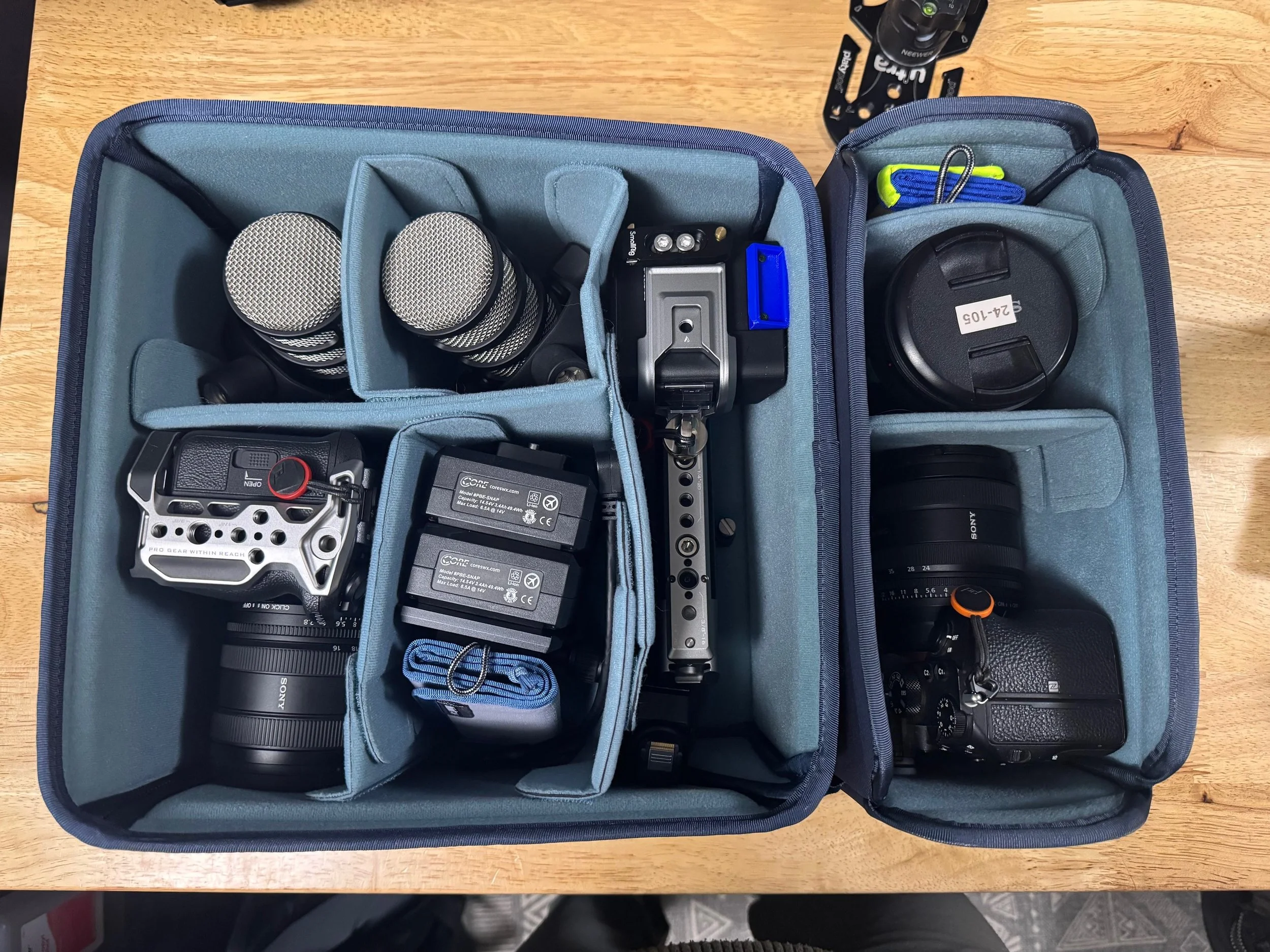
I began pairing it with the CoreSWX Edge Powerbase SNAP batteries which allows me to have extended battery life while maintaining a very small camera package and ease of flexibility for builds. I was able to record a 2 hour podcast episode without any interruptions which is something I couldn’t have done prior. It was plausible to do with the fx6, but not in the same compact size.

Where do I see this fitting in for my projects?
This is a fantastic B camera to my Fx6 for most situations, and is a vast improvement over my a7iii/iv which has been the B camera for video in my kit. For most of my career the 30 minute record limit of a7 series cameras hasn’t been an issue, but recently it has become more of a hindrance in many situations. It will also be a perfect A camera in situations where weight truly matters and I need to shave pounds in my bag for a project. This was tested recently when I implemented it to record 2 episodes of the Common Cultures Podcast with both mics recording directly to it.
Being able to put my entire podcast kit set up into a medium core unit from shimoda designs is absolutely ideal for trying to maintain a tiny footprint for travel while needing quality results to deliver what’s needed. At the end of the day, meeting client expectations with quality deliverables is the most necessary thing which the Fx3 can most definitely do.